Part 1: The Core Principles of Summarizing an Argumentative Essay
在开始总结之前,你必须理解总结的几个基本原则:
- Objective and Neutral (客观中立): 你的总结不应包含你自己的观点、评价或感情色彩,你的任务是忠实地呈现原文的论点,而不是评判它,避免使用 "I think," "In my opinion," "The author is wrong" 等表达。
- Concise and Brief (简洁精炼): 总结的目的是用最少的语言抓住文章的核心,你需要提炼出关键信息,省略次要的细节、例子和冗长的解释,总结的长度是原文的 10%-20%。
- Comprehensive and Accurate (全面准确): 总结必须涵盖原文的核心论点和主要论据,不能遗漏支持中心思想的关键理由,要确保事实和数据的准确性。
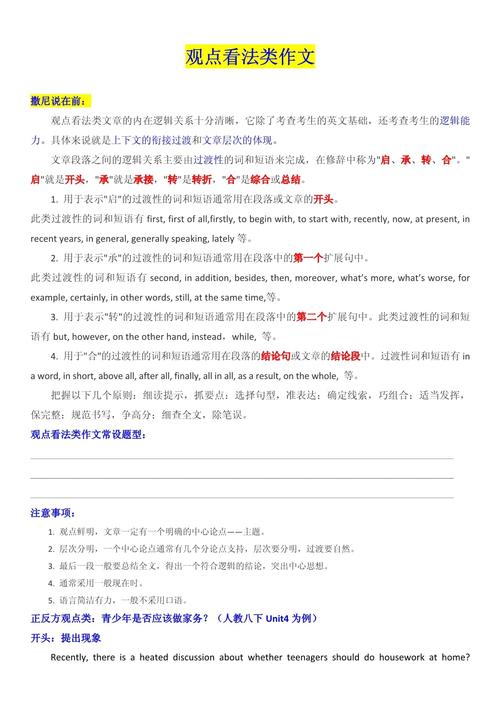
- Structured Logically (逻辑清晰): 总结应该按照原文的逻辑结构来组织,它会先介绍文章的中心论点,然后依次列出主要的分论点或支持证据。
Part 2: Step-by-Step Guide to Summarizing an Argumentative Essay
遵循以下四个步骤,可以让你系统地完成一篇高质量的总结。
Step 1: Read and Understand the Essay (阅读并理解原文)
这是最重要的一步,不要急于下笔。
- First Reading (通读): 快速阅读全文,了解文章的大致主题和作者的主要立场,问自己:“这篇文章主要在讨论什么?作者支持什么观点?”
- Second Reading (精读): 仔细阅读,并做笔记,重点关注:
- Thesis Statement (中心论点): 通常是文章开头或结尾的一句话,清晰地表明了作者的核心观点。
- Topic Sentences (主旨句): 每个段落的第一句通常是该段的中心思想,代表了作者的一个主要分论点或论据。
- Key Supporting Points (关键论据): 作者用了哪些理由、例子、数据或逻辑来支持他的中心论点?
- Conclusion (: 作者最后是如何重申或强调他的观点的?
Step 2: Identify the Key Components (识别关键组成部分)
根据第一步的阅读,提炼出以下核心信息:
- The Author's Main Argument (作者的中心论点): 用你自己的话概括。
- The Main Reasons (主要理由): 列出 2-3 个支持中心论点的核心理由。
- The Conclusion (: 作者得出了什么最终结论?
Step 3: Draft the Summary (撰写总结初稿)
把你提炼出的信息组织成连贯的段落。
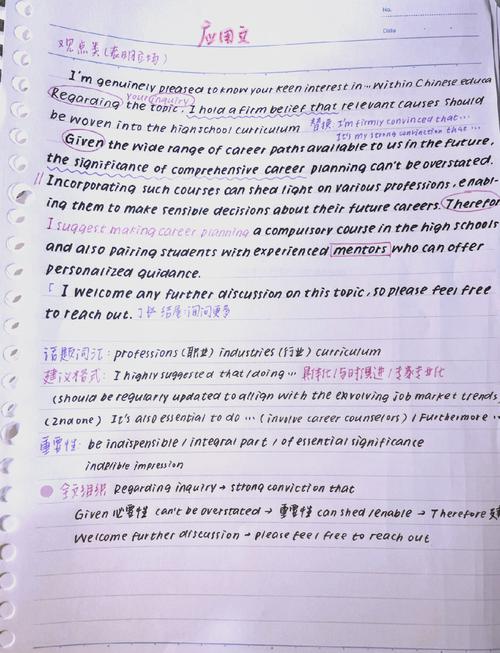
- Opening Sentence (开篇句): 用一句话直接点明文章的中心论点。"In the article '[Article Title]', the author, [Author's Name], argues that..."
- Body Sentences (主体句): 用 2-3 句话依次列出作者的主要理由,确保这些理由能有力地支持中心论点。"The author supports this claim by first pointing that... Furthermore, he/she argues that..."
- Concluding Sentence (结尾句): 用一句话概括作者的结论或最终立场。
Step 4: Revise and Refine (修改和润色)
检查你的初稿,确保它符合总结的所有原则。
- Check for Objectivity: 删除所有个人观点和评价性语言。
- Check for Conciseness: 删除不必要的词语和重复的信息。
- Check for Accuracy: 对照原文,确保你没有曲解作者的意思或遗漏关键信息。
- Check for Flow: 确保句子之间连接流畅,逻辑清晰。
Part 3: Useful Sentence Structures and Templates (实用句型模板)
你可以使用以下模板来构建你的总结。
Introducing the Author and Main Argument (引出作者和中心论点)
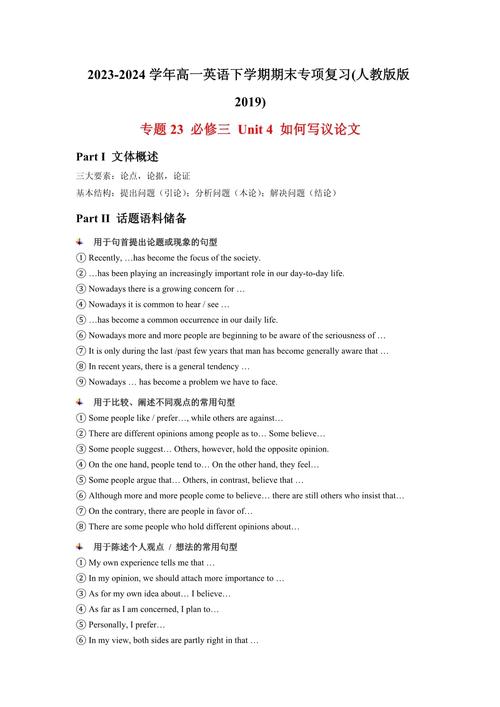
- In the article "[Article Title]", [Author's Name] argues that...
- The author of "[Article Title]" makes the case that...
- In his/her article, [Author's Name] contends that...
- The central thesis of the article is that...
Introducing Supporting Points (引出论据)
- The author supports this main argument by first asserting that...
- Furthermore, the author points out that...
- Another key reason the author provides is that...
- He/She also supports this claim with the example of...
- To bolster his/her argument, the author cites the statistic that...
Introducing the Conclusion (引出结论)
- In conclusion, the author reiterates that...
- Ultimately, the author concludes that...
- Therefore, [Author's Name]'s final position is that...
Part 4: Example (示例)
Original Article (简化版): ** The Case for a Four-Day Workweek
The traditional five-day, 40-hour workweek is outdated and inefficient. Companies should adopt a four-day workweek to boost productivity and improve employee well-being. First, a shorter workweek forces employees to be more focused and efficient during their working hours. With only four days to complete tasks, there is less time for distractions and unproductive meetings, leading to higher overall output. Second, employees with more time off are less stressed and more engaged. They have time to rest, pursue hobbies, and spend time with family, which reduces burnout and increases job satisfaction. A happy and healthy workforce is a productive workforce. In conclusion, by switching to a four-day workweek, companies can not only increase their bottom line but also create a more positive and sustainable work environment.
Summary (:
In the article "The Case for a Four-Day Workweek," the author argues that companies should implement a four-day workweek to enhance both productivity and employee well-being. The author supports this claim by first stating that a condensed work schedule encourages greater focus and efficiency, as employees have less time for distractions. Furthermore, the author contends that additional time off reduces employee stress and burnout, leading to higher job satisfaction and a more engaged workforce. In conclusion, the author asserts that adopting a four-day workweek is beneficial for both a company's profitability and its employees' health.
Final Checklist (自查清单)
在你提交总结前,问自己以下问题:
- [ ] Is my summary neutral? (我的总结是否客观中立?)
- [ ] Is it shorter than the original text? (它是否比原文更短?)
- [ ] Does it include the author's main argument and key reasons? (它是否包含了作者的中心论点和主要理由?)
- [ ] Is it free of my personal opinions? (它是否没有包含我个人的观点?)
- [ ] Is the language clear and concise? (语言是否清晰简洁?)
- [ ] Does it accurately reflect the original text? (它是否准确地反映了原文?)
掌握了这些方法和技巧,你就能自信地应对各种英语议论文的总结任务。