- 议论文的核心结构
- 各部分详细解析与模板句型
- 一个完整的范文示例
- 高分技巧与注意事项
Part 1: The Core Structure of an Argumentative Essay
标准的大学议论文通常遵循“五段式”结构,这是最清晰、最有效率的组织方式。
- Introduction (引言段): 提出问题,背景介绍,明确你的中心论点。
- Body Paragraph 1 (主体段一): 提出并论证你的第一个分论点。
- Body Paragraph 2 (主体段二): 提出并论证你的第二个分论点。
- Body Paragraph 3 (主体段三): 提出并论证你的第三个分论点(或反驳对立观点)。
- Conclusion (结论段): 总结全文,重申论点,并升华主题。
Part 2: Detailed Breakdown & Template Phrases
Introduction (引言段)
目标: 吸引读者,提供背景,并清晰地陈述你的立场(Thesis Statement)。
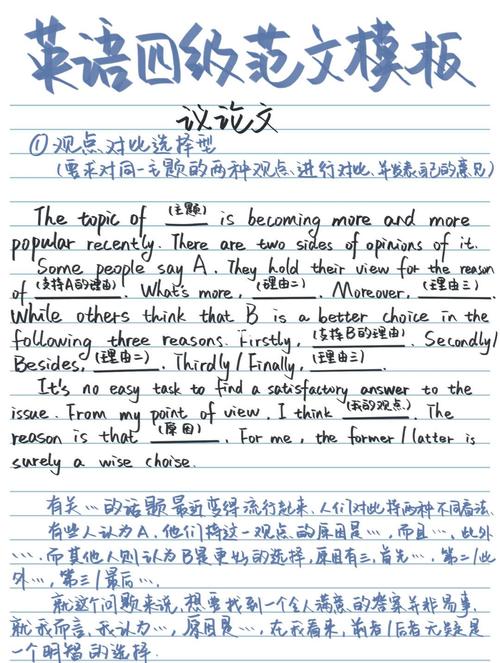
结构:
- Hook (钩子): 用一个引人入胜的句子开头,可以是普遍现象、一个有趣的事实、一个反问句或一个名言。
- Background Information (背景信息): 简要介绍话题的背景,让读者了解问题的来龙去脉。
- Thesis Statement (中心论点): 明确表达你的观点,这是整篇文章的灵魂,必须清晰、具体、有争议性。
模板句型:
-
Hook (钩子):
[Topic]has become one of the most contentious issues in contemporary society.- In an era defined by rapid technological advancement, the debate over
[Topic]has never been more relevant. - It is a widely acknowledged fact that
[a general statement about the topic]. - From a broad perspective, the question of whether
[the central question]is a pivotal one that demands careful consideration.
-
Background Information (背景信息):
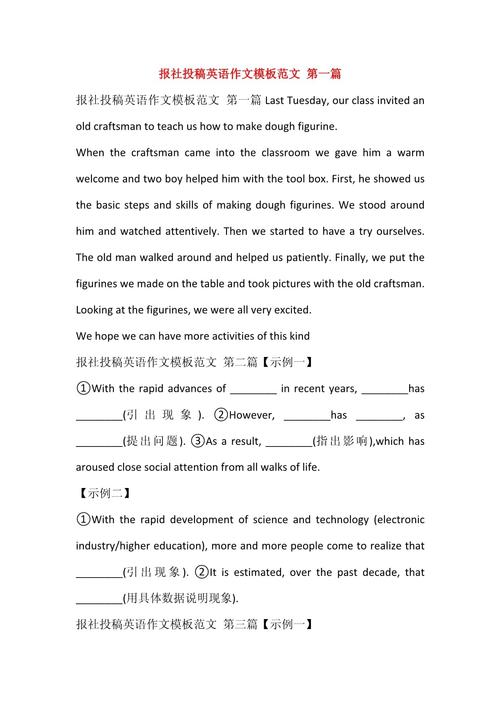 (图片来源网络,侵删)
- The proliferation of
[something related to the topic]has sparked a fierce debate regarding its impact on[broader area]. - Proponents of
[an idea]argue that[a brief summary of their view], while critics contend that[a brief summary of the opposing view]. - This essay will examine the multifaceted nature of
[Topic]by analyzing its primary advantages and disadvantages.
- The proliferation of
-
Thesis Statement (中心论点):
- 模板1 (平衡观点): While some may argue that
[opposing argument], I firmly believe that[your main argument]due to its significant benefits in[area 1]and[area 2]. - 模板2 (单边观点): This essay will argue that
[your main argument]is the most compelling perspective, as it not only[benefit 1]but also[benefit 2]. - 模板3 (问题解决型): Despite the challenges associated with
[Topic], its potential to[positive outcome]makes it an indispensable component of modern life.
- 模板1 (平衡观点): While some may argue that
Body Paragraphs (主体段)
目标: 每一段只支持一个分论点,并提供充分的证据来支撑。
结构 (PEA结构):
- P - Point (分论点): 段落的第一句话,清晰地表达本段的中心思想。
- E - Evidence (证据): 提供事实、数据、例子、专家观点或个人经历来支持你的分论点。
- A - Analysis (分析): 解释你的证据如何支持你的分论点,并将其与你的中心论点联系起来。
模板句型:
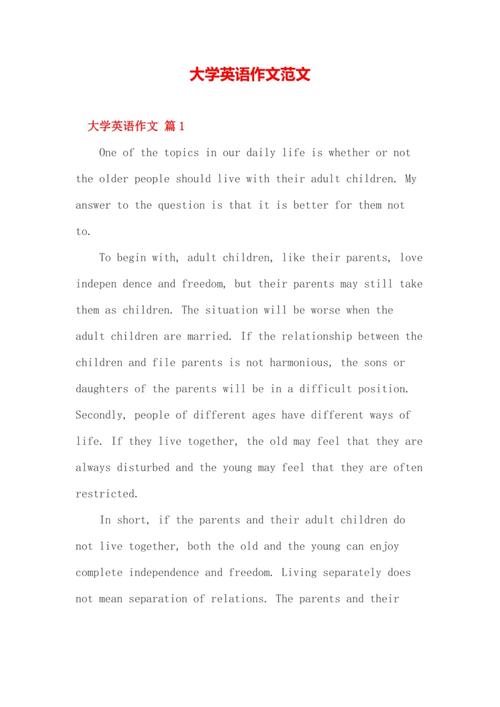
-
Topic Sentence (分论点句):
- A primary justification for my stance is that
[your first point]. - Another compelling argument in favor of
[your main argument]is its profound impact on[another area]. - This is largely because
[explain the reason for your point]. - From an economic/social/educational standpoint,
[your point]plays a pivotal role.
- A primary justification for my stance is that
-
Evidence & Analysis (证据与分析):
- For instance, a recent study conducted by
[source]revealed that[data or finding]. This statistic clearly illustrates that[how the evidence supports your point]. - A case in point is the example of
[a specific person, event, or situation]. This demonstrates that[how the example proves your point]. - As
[an expert's name]once noted,"a relevant quote". This insight reinforces the idea that[how the quote supports your point].
- For instance, a recent study conducted by
Counter-Argument & Rebuttal (对立观点与反驳段)
目标: 承认并反驳对立观点,这能极大地提升你文章的客观性和说服力,可以放在第二个主体段,也可以作为第三个主体段。
结构:
- Acknowledge (承认): 公平陈述对立方的观点。
- Rebut (反驳): 指出其弱点或局限性,并重申你自己的观点。
模板句型:
-
承认:
- It must be acknowledged that proponents of the opposing view have a valid point. They argue that
[state the opposing argument]. - Admittedly, there is some truth to the assertion that
[mention the opposing argument]. - While it is true that
[concede a small point], this does not necessarily mean that[the main opposing conclusion].
- It must be acknowledged that proponents of the opposing view have a valid point. They argue that
-
反驳:
- However, this perspective overlooks the more significant fact that
[your counter-argument]. - Nevertheless, this argument fails to consider
[a crucial factor that weakens their claim]. - The primary flaw in this reasoning is that
[explain the logical fallacy or weakness]. Therefore,[restate your own point]remains a more convincing position.
- However, this perspective overlooks the more significant fact that
Conclusion (结论段)
目标: 总结全文,重申论点,并给出最后的思考或展望。
结构:
- Restate Thesis (重申论点): 用不同的话重新表述你的中心论点。
- Summarize Main Points (总结分论点): 简要回顾你主体段中的主要论据。
- Concluding Statement (总结句): 提出一个最终的思考,预测未来,或提出一个建议。
模板句型:
-
重申论点:
- In conclusion, while the debate over
[Topic]is complex, the evidence overwhelmingly supports the view that[restate your thesis in new words]. - To sum up, the arguments presented above clearly demonstrate that
[restate your main argument].
- In conclusion, while the debate over
-
总结分论点:
- This has been shown through its beneficial effects on
[point 1], its role in[point 2], and its ability to[point 3].
- This has been shown through its beneficial effects on
-
总结句:
- Ultimately,
[Topic]is not merely a matter of choice, but a necessity for[a better future/society/individual development]. - It is imperative that we continue to explore and understand the implications of
[Topic]as we navigate the challenges of the 21st century. - Given the points discussed, it is reasonable to predict that
[a future prediction based on your argument].
- Ultimately,
Part 3: Full Sample Essay
Topic: Should university education be free for all?
Introduction
In an era defined by rapid technological advancement and fierce global competition, the accessibility of higher education has emerged as a critical social issue. While the traditional model of tuition-based funding is prevalent, a growing movement advocates for tuition-free university education for all. Proponents argue that education is a fundamental right, while critics contend that such a policy would place an unsustainable burden on taxpayers. This essay will argue that making university education free is a necessary and beneficial investment in the future, as it promotes greater social equity, fosters a more skilled workforce, and stimulates long-term economic growth.
Body Paragraph 1
A primary justification for free university education is its role in promoting social equity and breaking the cycle of poverty. Currently, the high cost of tuition acts as a significant barrier for students from low-income families, effectively locking them out of opportunities for upward mobility. For instance, a study by the Organisation for Economic Co-operation and Development (OECD) consistently shows a strong correlation between family income and educational attainment in countries with high tuition fees. By removing financial barriers, a tuition-free system would ensure that a student's academic potential, not their family's bank account, determines their future. This would create a more just and meritocratic society where talent is nurtured regardless of socioeconomic background.
Body Paragraph 2
Furthermore, a universally accessible higher education system is essential for building a competitive and innovative national economy. In today's knowledge-based economy, the most valuable resource is a highly skilled and educated workforce. By encouraging a larger percentage of the population to pursue degrees in science, technology, engineering, and mathematics (STEM), as well as other critical fields, a country can drive innovation and maintain its edge in the global market. For example, countries like Germany and Norway, which have low or no tuition fees, boast some of the world's most robust economies and highly skilled workforces. Therefore, investing in free education is not a cost but a strategic investment in human capital that yields substantial economic returns.
Body Paragraph 3 (Counter-Argument & Rebuttal)
Admittedly, opponents of free university education raise valid concerns about the immense financial strain it would place on the government and taxpayers. They argue that public funds would be better spent on other pressing areas like healthcare or primary education. While it is true that implementing such a policy would require significant revenue reallocation, this perspective overlooks the long-term economic benefits. The taxes paid by a larger, more highly educated workforce, coupled with the reduced costs associated with social welfare programs, would more than compensate for the initial investment. The economic stimulus generated by a more skilled populace far outweighs the short-term fiscal challenges.
Conclusion
In conclusion, the pursuit of a tuition-free university education is a forward-thinking and necessary policy. It addresses fundamental issues of social justice by ensuring equal opportunity for all, regardless of their economic status. Moreover, it serves as a powerful engine for economic prosperity by cultivating the skilled workforce needed for future innovation. While the financial challenges are considerable, the long-term societal and economic benefits make it a worthwhile endeavor. Ultimately, a nation's greatest asset is its people, and providing free university education is the most effective way to unlock that potential.
Part 4: High-Scoring Tips & Reminders
- Academic Tone: 避免使用缩写 (
don't,can't)、口语化词汇 (stuff,thing) 和过于情绪化的表达 (I hate...,It's amazing!),保持客观、正式的语气。 - Vocabulary: 多使用学术词汇,如
demonstrate,illustrate,contend,advocate,essential,crucial,detrimental等。 - Sentence Structure: 不要总用 "I think..." 或 "This is..." 开头,尝试使用从句、分词结构和倒装句来增加句式的多样性。
- 简单句: Many people support this idea.
- 复杂句:
Supported by a growing body of evidence, the idea that...或What truly matters is not... but...
- Cohesion and Coherence: 使用恰当的过渡词和短语来连接段落和句子,使文章逻辑流畅。
- 表递进:
Furthermore,Moreover,In addition - 表转折:
However,Nevertheless,On the other hand - 表因果:
Therefore,Consequently,As a result - 表总结:
In conclusion,To sum up,Overall
- 表递进:
- Plan Before You Write: 动笔前列一个简单的提纲,明确你的论点和论据,这能防止你跑题或思路混乱。
- Proofread: 写完后一定要留出时间检查语法、拼写和标点错误,一篇满是错误的文章很难得高分。