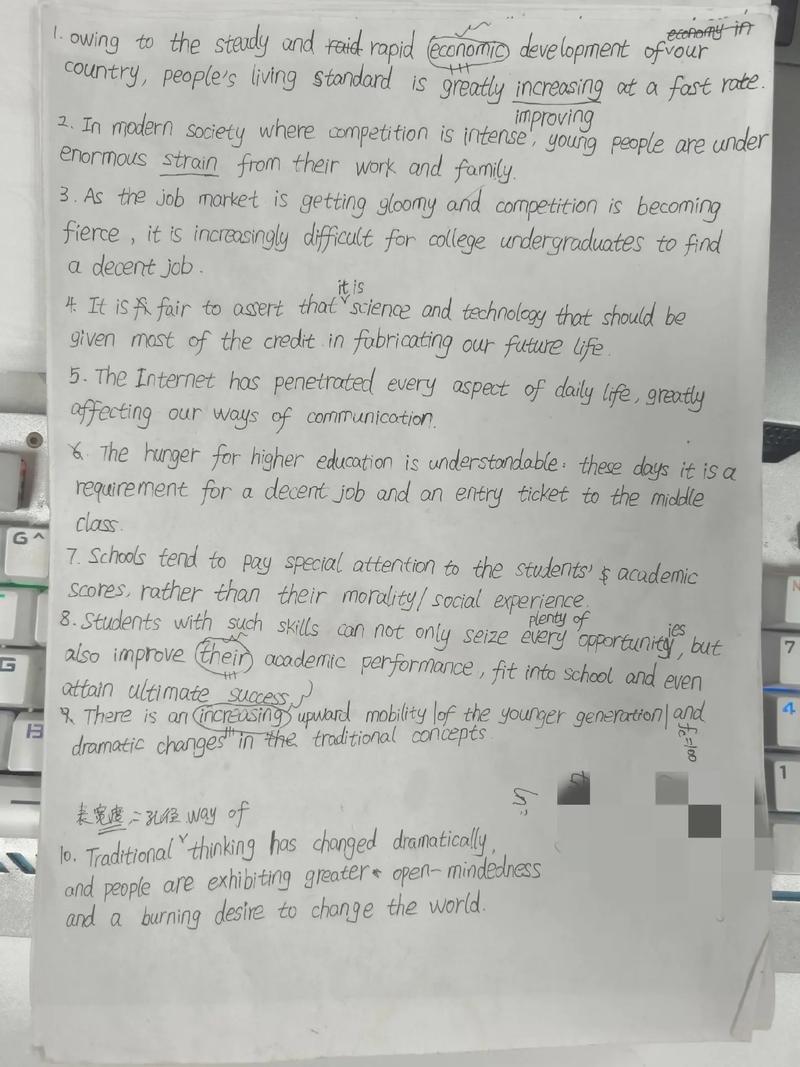
在大学英语六级考试中,议论文写作是重要考查题型,掌握清晰的模板结构能有效提升文章的逻辑性和得分率,一个规范的六级议论文模板通常包含引言段、主体论证段和结论段三大部分,各部分需承担不同的功能,并通过恰当的过渡句衔接,形成完整的论证链条,以下将从模板结构、各段功能、常用句式及注意事项四个维度展开详细说明,并辅以表格对比不同论证方法的适用场景,最后附上相关问答。
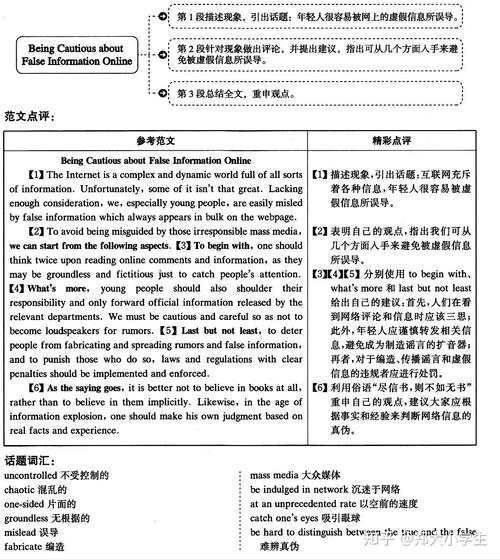
模板结构与功能解析
引言段(Introduction)
引言段的作用是引出话题、明确立场、概述论证方向,通常包含“背景引入+问题提出+ thesis statement(中心论点)”三要素。
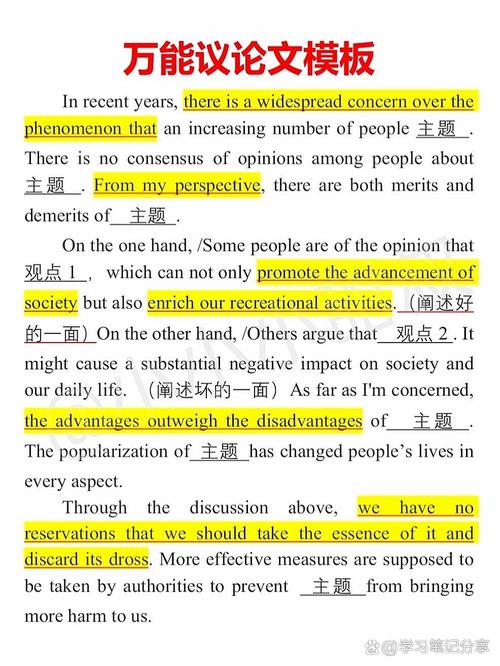
- 背景引入:用宏观视角或普遍现象切入话题,可引用数据、名言或社会热点,避免直接抛出观点。“In contemporary society, the rapid advancement of artificial intelligence has sparked widespread debate about its impact on employment.”(在当代社会,人工智能的快速发展引发了关于其对就业影响的广泛讨论。)
- 问题提出:在背景基础上,聚焦争议点或核心矛盾,引出下文将讨论的问题。“While some argue that AI will inevitably replace human workers, others believe it will create new job opportunities. This essay aims to explore both perspectives and argue that technological change, rather than posing a threat, ultimately drives societal progress.”(虽然一些人认为人工智能将不可避免地取代人类工人,但其他人认为它会创造新的就业机会,本文旨在探讨两种观点,并论证技术变革而非构成威胁,最终推动社会进步。)
- 中心论点:清晰表明作者立场,通常为“主旨句+分论点预告”。“From my perspective, AI enhances productivity rather than eliminating jobs, as history shows technological innovation always creates more opportunities than it destroys, while governments and individuals can adapt through education and policy adjustment.”(在我看来,人工智能提升生产力而非消除就业,因为历史表明技术创新总是创造更多机会而非破坏,同时政府和个人可以通过教育和政策调整适应变化。)
主体论证段(Body Paragraphs)
主体段是文章的核心,需围绕中心论点展开2-3个分论点,每个段落采用“主题句+论据+分析+小结”的结构。
- 主题句:明确本段分论点,通常置于段首,与中心论点逻辑一致。“Firstly, technological innovation has historically generated more employment opportunities than it has eliminated.”(技术创新历史上创造的就业机会远多于其消除的就业机会。)
- 论据:支持主题句的论据,包括数据、案例、权威观点等。“During the Industrial Revolution, the mechanization of agriculture led to a decline in farm jobs, but simultaneously spurred the growth of manufacturing and service sectors, creating millions of new positions. Similarly, a 2025 World Economic Forum report predicts that while AI may displace 85 million jobs by 2025, it will also create 97 million new roles, particularly in technology and healthcare.”(工业革命期间,农业机械化导致农业就业岗位减少,但同时促进了制造业和服务业的发展,创造了数百万新职位,同样,2025年世界经济论坛报告预测,到2025年人工智能可能取代8500万个工作岗位,但也将创造9700万个新职位,尤其是在技术和医疗领域。)
- 分析:阐释论据与主题句的关联,避免“论据堆砌”。“This demonstrates that technological change does not simply replace jobs but transforms the labor market, requiring workers to acquire new skills. As old roles become obsolete, new ones emerge, driven by the demands of a tech-driven economy.”(这表明技术变革并非简单地取代工作,而是转型劳动力市场,要求工人掌握新技能,随着旧角色过时,新角色应运而生,由技术驱动经济的需求推动。)
- 小结:重申分论点,并自然过渡到下一段。“Thus, rather than fearing job loss, society should focus on fostering adaptability to harness the benefits of technological progress.”(与其担心失业,社会应专注于培养适应能力,以利用技术进步的益处。)
若采用让步-反驳结构(常用于对比论证),段落可调整为“让步句+反例/转折+反驳观点”。“Admittedly, some low-skilled jobs may be replaced by AI in the short term. However, this trend is not unique to our era; every major technological shift, from the printing press to the internet, has initially disrupted certain industries while ultimately creating more value and employment.”(诚然,一些低技能工作短期内可能被人工智能取代,这一趋势并非我们时代独有;从印刷机到互联网,每一次重大技术变革最初都曾扰乱某些行业,但最终创造了更多价值和就业。)
结论段(Conclusion)
结论段需总结全文、重申中心论点、提出建议或展望,避免引入新论据。
- 总结分论点:简要回顾主体段的核心观点。“In conclusion, while AI may disrupt certain job sectors, its overall impact on employment is positive, as historical evidence and expert predictions show it creates new opportunities and drives economic growth.”(尽管人工智能可能扰乱某些就业部门,但其对就业的总体影响是积极的,因为历史证据和专家预测表明,它创造了新机会并推动经济增长。)
- 重申中心论点:用不同措辞再次强调立场。“Therefore, instead of resisting technological advancement, we should embrace it and invest in education and training to ensure workers can thrive in the evolving job market.”(我们应抵制技术进步,而是拥抱它,投资教育和培训,确保工人能在不断变化的就业市场中茁壮成长。)
- 建议/展望:提出解决方案或未来方向,提升文章深度。“Governments should collaborate with businesses to develop reskilling programs, while individuals must adopt a mindset of lifelong learning. Only through such collective efforts can we maximize the benefits of AI and minimize its potential drawbacks.”(政府应与企业合作开发再培训项目,个人必须采用终身学习的心态,只有通过这样的集体努力,我们才能最大化人工智能的益处,并将其潜在缺点降至最低。)
常用句式与过渡词
引言段句式
- 引入话题:“Nowadays, there is a growing concern over...”“The issue of... has become a hot topic in recent years.”
- 提出争议:“When it comes to..., opinions are divided.”“Some people argue that..., while others maintain that...”
- 表明立场:“From my perspective,...”“As far as I am concerned,...”“I am convinced that...”
主体段句式
- 提出分论点:“First and foremost,...”“In the first place,...”“One of the primary reasons is that...”
- 列举论据:“For instance,...“A case in point is...”“According to a survey/report by...”
- 分析论证:“This phenomenon can be attributed to...”“The underlying reason is that...”“What really matters is...”
- 让步转折:“Admittedly,...“Nevertheless,...“However,...“On the contrary,...”
结论段句式
- 总结观点:“To sum up,...“In a nutshell,...“All in all,...”
- 重申立场:“Given the above discussion, it is safe to say that...“Therefore, we can draw the conclusion that...”
- 展望未来:“It is imperative that we...“Only by doing so can we...“Looking ahead, we should...”
过渡词
- 逻辑递进:“Moreover,...“Furthermore,...“In addition,...“Besides,...”
- 对比转折:“However,...“On the other hand,...“In contrast,...“Nevertheless,...”
- 因果关系:“Therefore,...“Thus,...“As a result,...“Consequently,...”
论证方法适用场景对比
| 论证方法 | 适用场景 | 示例方向 |
|---|---|---|
| 举例论证 | 需具体事例支撑观点,增强说服力 | 技术创新对就业的影响(工业革命、互联网案例) |
| 数据论证 | 适用于客观、可量化的话题,增强科学性 | 人工智能对就业影响的预测数据(世界经济论坛报告) |
| 对比论证 | 适用于争议性话题,通过正反对比凸显立场 | 支持vs反对人工智能的观点对比 |
| 因果论证 | 需分析现象背后的原因或结果,逻辑严谨 | 分析失业率上升的原因(技术变革vs教育滞后) |
| 引用论证 | 引用名言、专家观点或权威报告,提升可信度 | 引用经济学家观点说明技术进步的长期益处 |
注意事项
- 避免模板化痕迹:模板是框架,需结合具体话题灵活调整,避免生搬硬套句式,若话题为“环境保护”,引言段可从气候变化的紧迫性切入,而非泛泛而谈“科技发展”。
- 论据需真实相关:六级作文允许合理“虚构”数据,但需符合常识,避免出现明显错误(如“2025年中国人口50亿”),优先使用普遍认可的观点或假设性案例(“Suppose a company adopts AI...”)。
- 语言简洁准确:避免冗长复杂句,多用复合句(定语从句、状语从句)和连接词,确保逻辑清晰。“While some people worry about AI taking their jobs, they fail to consider that it can also free humans from repetitive tasks, allowing them to focus on creative and strategic work.”(虽然一些人担心人工智能抢走他们的工作,但他们没有考虑到它也能将人类从重复性工作中解放出来,让他们专注于创造性和战略性的工作。)
- 立场明确一致:全文需围绕中心论点展开,避免观点矛盾,若让步反驳,需明确转折,确保读者清晰理解立场。
相关问答FAQs
Q1: 使用模板会导致作文缺乏个性吗?如何避免?
A1: 模板提供的是结构框架,而非具体内容,避免个性化的关键在于“填充”的独特性和论证的深度,结合具体话题选择合适的论据(如最新案例、个人观察),避免使用通用模板中的“万能例子”;在分析部分加入个人见解,例如讨论“AI与就业”时,可结合自身专业(如计算机专业学生谈AI对编程岗位的影响)或社会现象(如“零工经济”的兴起);灵活调整句式,避免过度依赖模板句式,用多样化的表达方式(如倒装句、强调句)提升语言特色,只要内容充实、论证独特,模板反而能帮助个性观点更清晰、有条理地呈现。
Q2: 六级议论文中,论据不足时如何合理“编造”数据或案例?
A2: 六级作文允许基于常识的合理虚构,但需遵循“真实感”原则:一是数据范围要合理,例如讨论“大学生就业率”,可设定为“85%左右”,避免极端数值(如“100%”或“10%”);二是案例需具体且有细节,例如描述“某科技公司采用AI后效率提升”,可补充“某电商公司引入AI客服系统后,客户响应时间从30分钟缩短至5分钟,满意度提升20%”,通过具体公司、时间、数据增强可信度;三是引用“虚拟专家”时,可用“a renowned economist”“a study by a leading university”等模糊表述,避免虚构具体人名(如“张教授指出”)可能引发的质疑,核心是让论据服务于论证逻辑,而非单纯追求“数据看起来很厉害”。